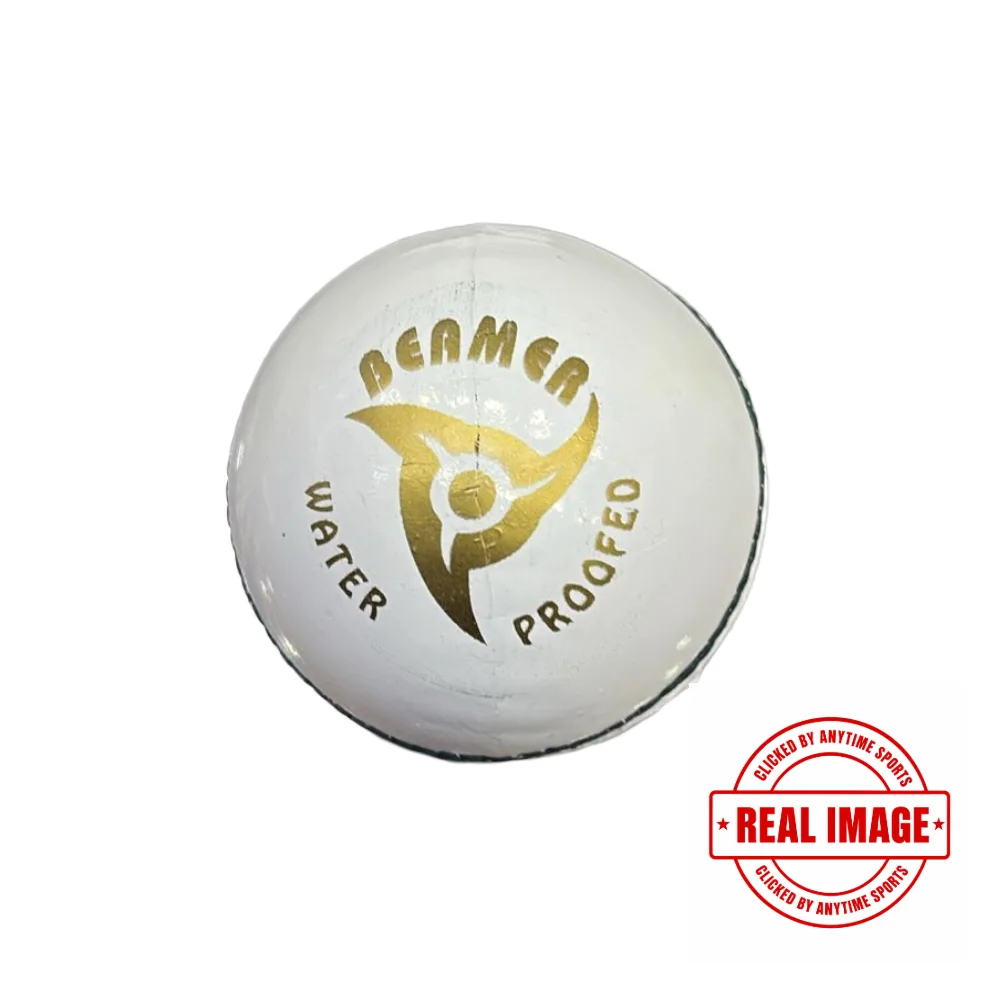
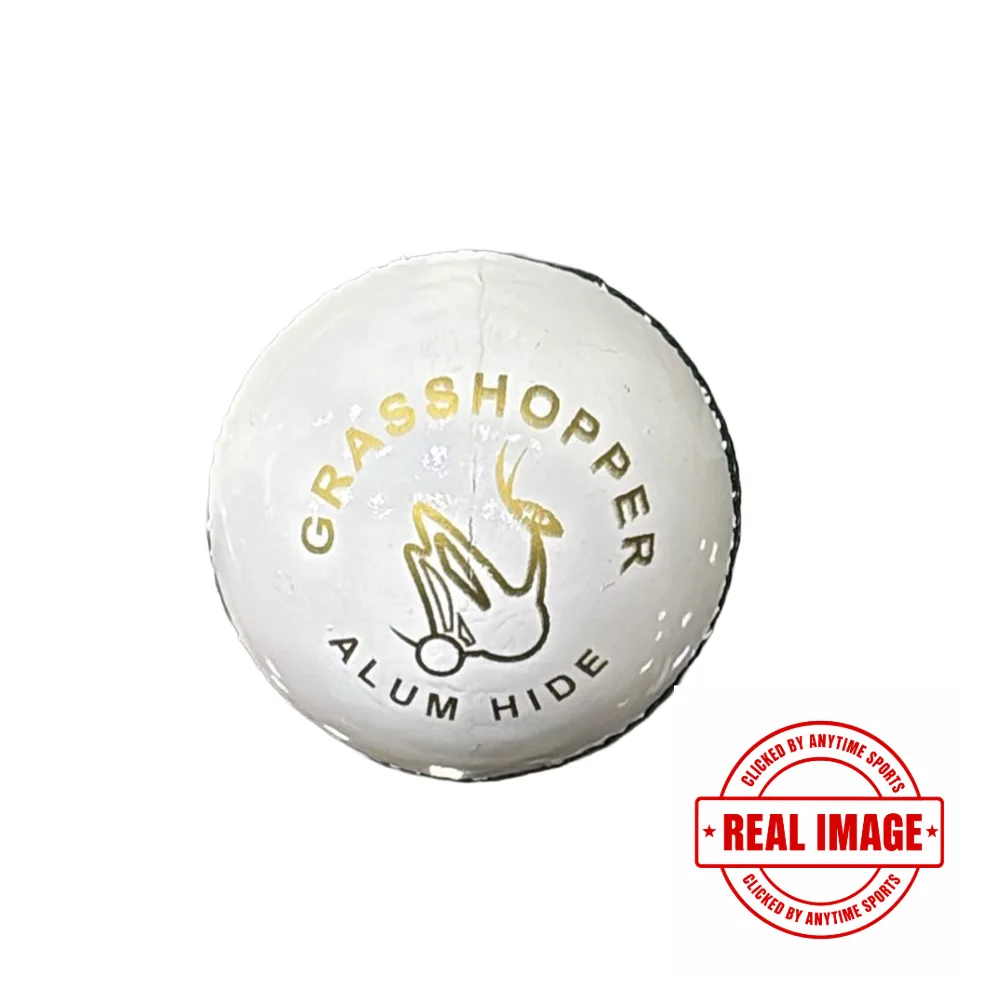
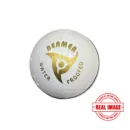
Grasshopper Beamer White Leather Cricket Ball — Built for Day-Night and Limited-Overs Cricket
White cricket balls exist for a specific reason — visibility under floodlights and in twilight conditions where a red ball becomes difficult to pick up against the background. T20 cricket, one-day matches played into the evening, day-night fixtures at club and academy level, and any format where both innings or the entire match is played under artificial light — these are the conditions where white is the correct ball.
The Grasshopper Beamer in white is the same ball as the red Beamer in every structural sense — alum-tanned leather, four-piece construction, raised multi-row seam — finished in white. It swings, seams, and bounces the same way. The difference is the dye, and the conditions it’s designed for. If your club plays floodlit T20s, evening matches, or any limited-overs format where white ball is the standard, this is the ball you need.
Grasshopper is a Meerut-based manufacturer with generations of cricket ball-making behind them. The Beamer is their club and recreational match ball — properly constructed, genuinely leather, and priced practically for team use and academy sessions.
Alum Tanned Leather — Consistent Surface for Swing and Seam
The outer casing uses alum-tanned leather — the traditional tanning process for cricket ball leather that produces a firm, smooth, consistent surface. White leather balls are treated with additional bleaching and dyeing processes to achieve the white finish, but the underlying leather quality and tanning method remain the same. The surface takes shine well on the polished side and roughens naturally on the other as the innings progresses — creating the aerodynamic asymmetry that produces conventional and reverse swing even with a white ball.
White balls do tend to deteriorate faster than red balls in terms of surface condition — the dye can scuff and the surface can discolour more visibly under play. This is true of white leather balls at all levels, not a specific limitation of the Beamer. Using two balls in limited-overs formats — one from each end — is the standard approach at professional level precisely for this reason, and worth considering for longer club matches with white balls.
Four-Piece Construction — Proper Cricket Ball Architecture
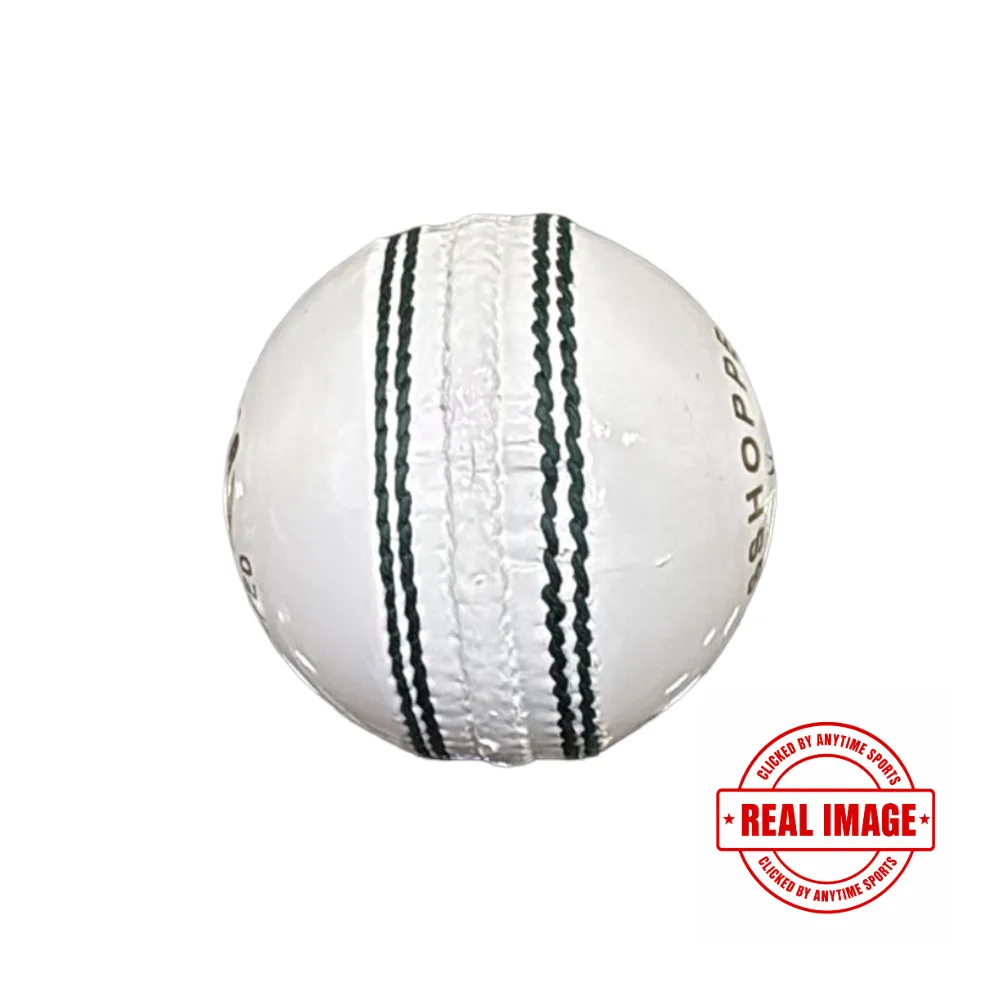
Four panels of alum-tanned leather shaped and stitched around a cork core, with a raised multi-row seam at the equator. This is the correct construction for a genuine cricket ball at any level. The four-piece structure distributes leather evenly around the circumference, maintaining the ball’s roundness through regular play. The raised seam gives seam bowlers a workable ridge to present upright at delivery — the primary tool for seam movement off the pitch.
White — The Limited-Overs Standard
White is the ball colour used in all forms of limited-overs cricket — ODIs, T20s, and most evening and floodlit club matches globally. It is more visible under artificial lighting than red and against coloured clothing, which is why limited-overs cricket adopted it. For any club or academy running T20 or evening matches, stocking white balls alongside red is standard practice.
Available in Size 4 and Size 5
Size 5 is the standard adult size — correct for all senior cricket. Size 4 is the junior size, appropriate for younger players still developing grip strength and hand size. We stock both sizes at Anytime Sports.